 Configure & Quote ↗
Configure & Quote ↗
Configure & Quote ↗
Compliant, slip-resistant stair edging for commercial, civic and transport projects. Aluminium, brass and silicon carbide ranges tested to AS 4586:2013 for P5 slip resistance and detailed to the AS 1428.1:2021 luminance-contrast requirement. Supplied and installed across Victoria, South Australia and Western Australia.
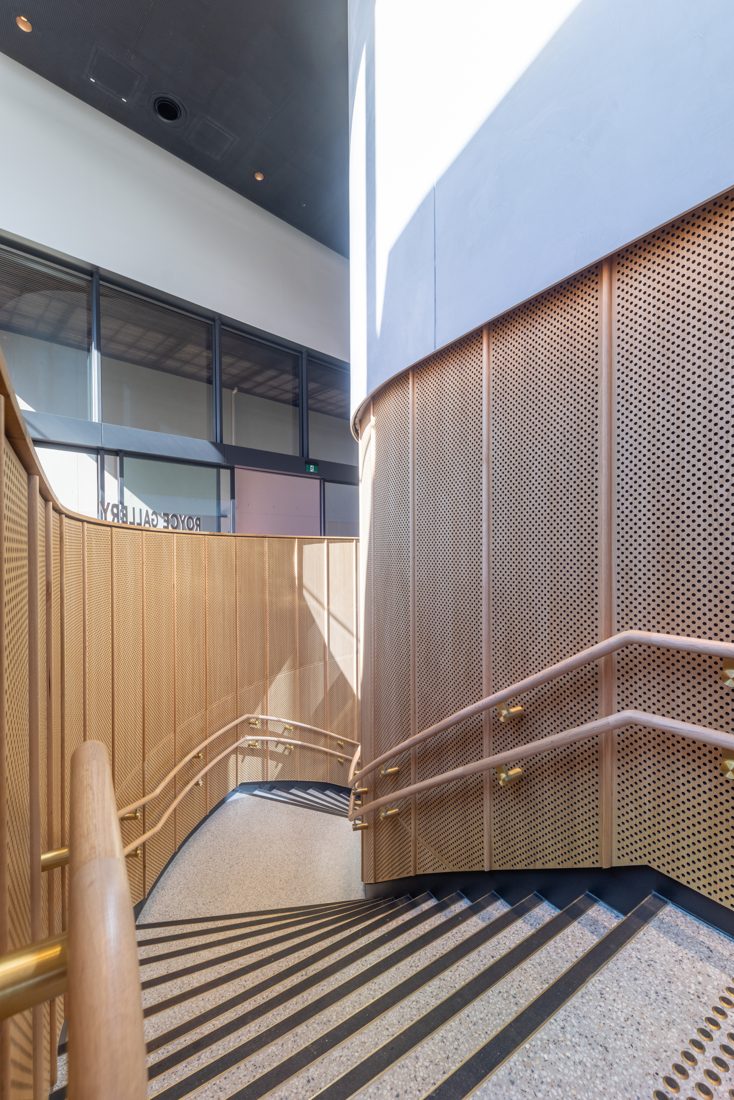
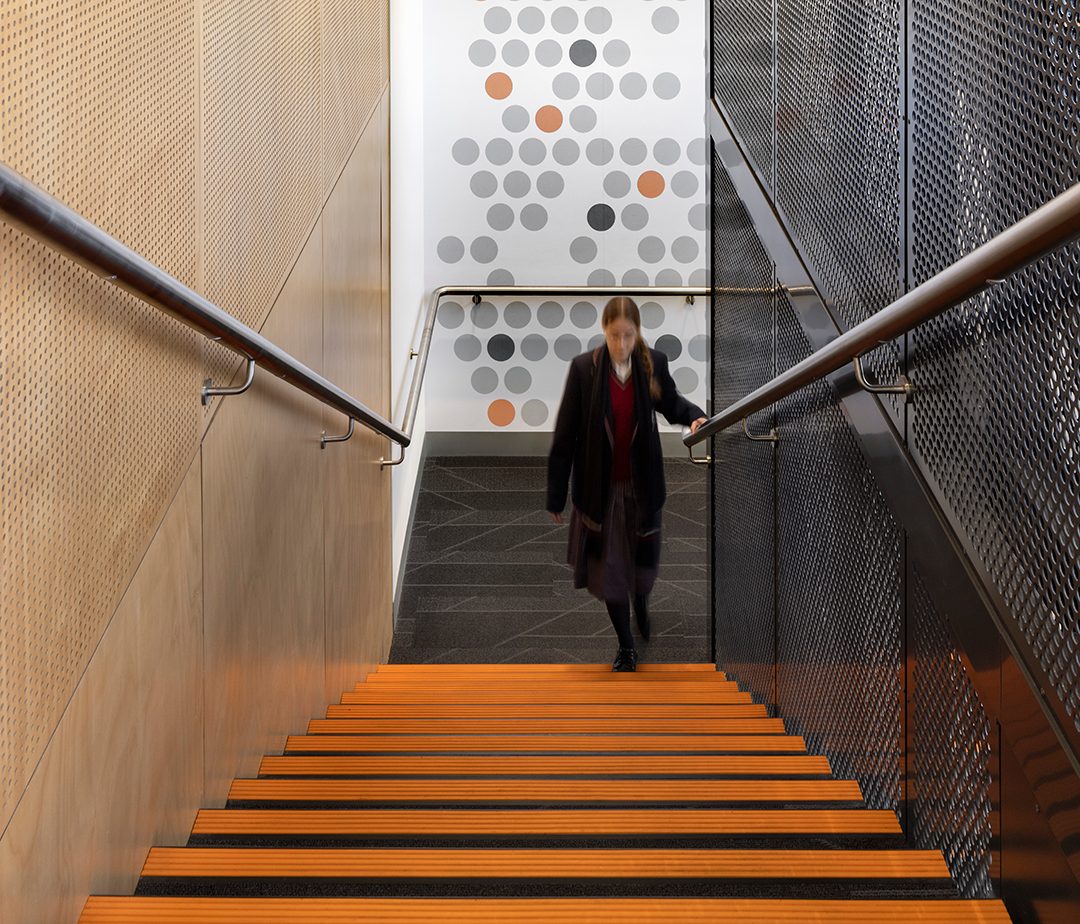
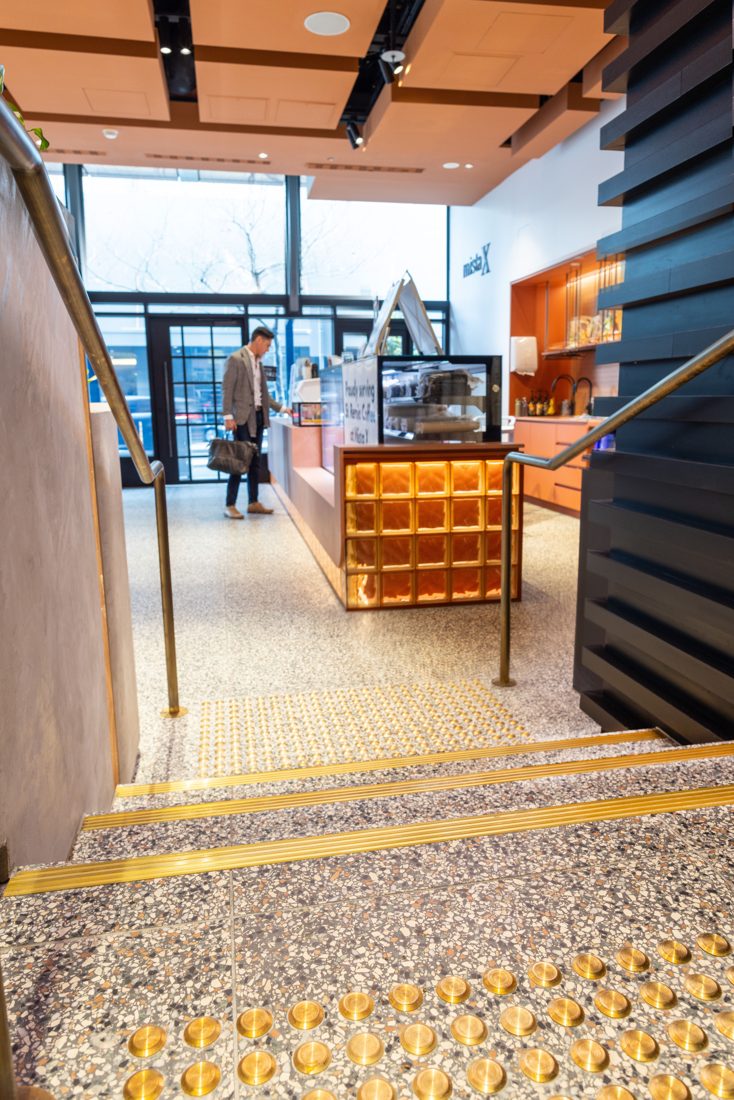
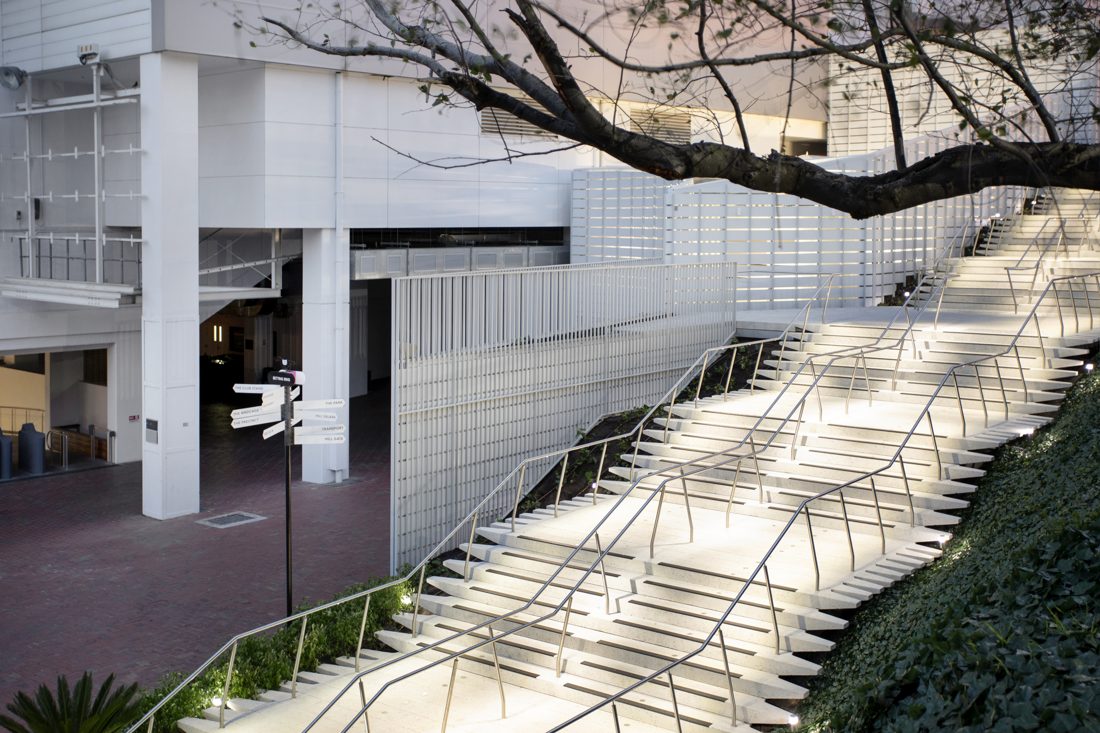

Stair nosing is the protective, high-visibility edging fitted to the leading edge of each step. On a commercial stair it does three jobs at once: it warns vision-impaired users where the edge is, it provides slip resistance underfoot, and it protects the step structure from wear.
For a stair to pass an accessibility audit, the nosing must deliver a minimum 30% luminance contrast across a strip 50-75mm wide on both the tread and the riser under AS 1428.1, and a slip-resistance classification that suits the application under AS 4586. Get either wrong and the stair fails, which is why Korb supplies the slip and LRV test data with every range.
Korb's stair nosing spans four ranges, Aalto aluminium and brass, the Venturi carpet and flooring systems, the corrugated and striped Tadao profiles, and the silicon carbide Carbtech, in surface-mounted, recessed and downturn formats to suit new builds and retrofits alike.
Every profile is available supply-only or as a full supply-and-install package, with one point of accountability from specification through to handover.
Every stairway on an accessible path of travel needs a compliant nosing on every tread in the flight, including the top tread, which is the one most often missed, and the bottom tread. Landings themselves do not need a nosing strip, but the last tread before each landing does. These are the clause 11 requirements every Korb profile is detailed against.
| Requirement | What the standard sets |
|---|---|
| Luminance contrast | Minimum 30% against the adjacent tread, calculated with the Bowman-Sapolinski equation. Use the LRV calculator to confirm a pairing before it is specified. |
| Strip depth | 50 to 75mm measured across the tread surface, extending the full width of the path of travel. |
| Continuity | A single continuous strip. Splitting the contrast into multiple colour bands, known as a multistripe nosing, does not comply. Surface texture such as corrugation, ribbing or silicon carbide is permitted, because what fails is the colour banding, not the texture. |
| Setback | A maximum of 15mm from the leading edge. Where the strip is not set back, any contrast carried onto the riser is limited to 10mm vertical. |
| Nose profile | A sharp intersection, a radius up to 5mm, or a chamfer up to 5 x 5mm. A full bullnose or any radius over 5mm does not comply and needs retrofit. |
| Slip resistance | Classified to AS 4586:2013 wet pendulum. HB 198:2014 recommends P3 internal dry and P4 external wet as deemed-to-satisfy minimums, and P5 for uncovered external steps. |
| Setting | What tends to drive the specification |
|---|---|
| Commercial and office | Internal dry flights where the contrast strip and a clean architectural edge carry equal weight. Recessed aluminium is the common answer on new build, surface mounted on fitout. |
| Civic and education | High scrutiny on accessibility audit, so the LRV evidence matters as much as the profile. Brass and anodised aluminium dominate. |
| Transport and rail | Continuous heavy traffic and frequent wet entry. Silicon carbide inserts and replaceable surface mounted profiles suit maintenance access. |
| Industrial and plant | Wheeled loads, external steps and soiled conditions push the specification toward a P5 classified silicon carbide insert and a surface mounted profile that can be replaced without disturbing the tread. |
| Retrofit and upgrade | Where an existing stair fails audit, usually on a bullnose over 5mm radius, on missing contrast, or on a multistripe nosing. Surface mounted profiles resolve all three without rebuilding the flight. |
Korb supplies and installs stair nosing from three locations: Melbourne in Thornbury, Adelaide in Thebarton and Perth in O'Connor, covering Victoria, South Australia and Western Australia. Every profile is available supply only for a builder's own installer, or as a full supply and install package with one point of accountability from specification through to handover. Slip classification and LRV test data are issued with the order, so the compliance evidence is on file before the stair is inspected rather than chased after it.
Get a quote, request samples or talk to us about supply and install across VIC, SA and WA.

